Review


pcdna3 1 zeocin mammalian expression vector  (Thermo Fisher)


Bioz Verified Symbol Thermo Fisher is a verified supplier
Bioz Manufacturer Symbol Thermo Fisher manufactures this product  

  • Logo
  • About
  • News
  • Press Release
  • Team
  • Advisors
  • Partners
  • Contact
  • Bioz Stars
  • Bioz vStars
  • 99

    Structured Review

    Thermo Fisher pcdna3 1 zeocin mammalian expression vector
    Pcdna3 1 Zeocin Mammalian Expression Vector, supplied by Thermo Fisher, used in various techniques. Bioz Stars score: 99/100, based on 1 PubMed citations. ZERO BIAS - scores, article reviews, protocol conditions and more
    https://www.bioz.com/product/pcdna3%2E1(+)+mammalian+expression+vector/Zeocin/pm24944734__ml4004759_si_001-158-11-15
    Average 99 stars, based on 1 article reviews
    pcdna3 1 zeocin mammalian expression vector - by Bioz Stars, 2026-10
    99/100 stars

    Images

    Related Articles

    Expressing:

    Article Title: The Protective Effects of Mcl-1 on Mitochondrial Damage and Oxidative Stress in Imiquimod-Induced Cancer Cell Death
    Article Snippet: To generate BCC and AGS clones overexpressing Mcl-1, a DNA fragment containing the full-length human Mcl-1 open reading frame was inserted into the pcDNA3.1 mammalian expression vector (Invitrogen).

    Article Title: Deep Learning Approach for the Discovery of Tumor-Targeting Small Organic Ligands from DNA-Encoded Chemical Libraries
    Article Snippet: Briefly, CHO cells were transfected with a pcDNA3.1 mammalian expression vector (Invitrogen) carrying a CAIX gene where the endogenous leader sequence was replaced by a murine IgG signal peptide and a hexa-histidine-tag sequence was fused at the 3′ end of the CAIX gene to facilitate purification.

    Article Title: Compound Heterozygosity for Late-Onset Cardiomyopathy-Causative ALPK3 Coding Variant and Novel Intronic Variant Cause Infantile Hypertrophic Cardiomyopathy.
    Article Snippet: Hypertrophic and dilated cardiomyopathy (HCM, DCM) are leading causes of cardiovascular morbidity and mortality in children.. The pseudokinase alpha-protein kinase 3 (ALPK3) plays an essential role in sarcomere organization and cardiomyocyte differentiation.. ALPK3 coding mutations are causative of recessively inherited pediatric-onset DCM and HCM with variable expression of facial dysmorphism and skeletal abnormalities and implicated in dominantly inherited adult-onset cardiomyopathy.

    Article Title: 2-Deoxy-D-Glucose Downregulates Fatty Acid Synthase Gene Expression Via an Endoplasmic Reticulum Stress-Dependent Pathway in HeLa Cells.
    Article Snippet: Fatty acid synthase (FASN) catalyzes the rate-limiting step of cellular lipogenesis.. FASN expression is upregulated in various types of cancer cells, implying that FASN is a potential target for cancer therapy.. 2-Deoxy-D-glucose (2-DG) specifically targets cancer cells by inhibiting glycolysis and glucose metabolism, resulting in multiple anticancer effects.

    Article Title: Mechanistic and structural studies reveal NRAP-1-dependent coincident activation of NMDARs.
    Article Snippet: DNA plasmids used for expression in Expi293 cells were generated by subcloning the relevant DNA sequence into the pCDNA3.1 mammalian expression vector (Life Technologies): pDM2635, nrap-1; pDM2651, Twin-strep::nrap-1; pDM2666, nrap-1::Twin-strep; pDM2684, Twin-strep::nrap-1(sol-2LDLa); pDM2697, Twin-strep::nrap-1(DCa2+); pDM2696, Twin-strep::nrap-1(DS-S); pDM2790, Optimized Twin-strep::nrap-1; pDM2791, Optimized Twin-strep::Dmelnrap-1; pDM2700, Twin-strep::nrap-1(DLDLa); pDM2693, Twin-strep::nrap-1(DFSDE); pDM3003, Twin-strep::Dmelnrap-1(Ce Cterm); pDM3004, Twin-strep::nrap-1 (Dmel C-term); pDM3027, Twin-strep::Dmelnrap-1(Ce N-term); pDM3028, Twin-strep::nrap-1(Dmel N-term); pDM2824, Twin-strep::nrap-1(Dmel LDLa); pDM2825, Twin-strep::Dmelnrap-1(Ce LDLa); pDM2921, Optimized Twin-strep::TEV::nrap-1.

    Article Title: Infection pressure in apes has driven selection for CD4 alleles that resist lentivirus (HIV/SIV) infection
    Article Snippet: PCR products were cloned into the pCR8/GW/TOPO TA plasmid (Thermo Fisher) and then shuttled into a Gateway-converted pCDNA3.1 mammalian expression vector (Invitrogen).

    Article Title: A human antibody potently neutralizes RSV by targeting the conserved hydrophobic region of prefusion F.
    Article Snippet: The sequences were synthesized by Shanghai Generay Biotech Co., Ltd (Shanghai, China) and cloned into the pcDNA3.1 mammalian expression vector (Thermo Fisher Scientific).

    Article Title: Protein regulator of cytokinesis 1 regulates autophagy in hepatitis B virus‑associated liver cancer development
    Article Snippet: PRC1 cDNA or HBx DNA fragments were subcloned into a pcDNA3.1 mammalian expression vector (Invitrogen; Thermo Fisher Scientific, Inc.).

    Plasmid Preparation:

    Article Title: The Protective Effects of Mcl-1 on Mitochondrial Damage and Oxidative Stress in Imiquimod-Induced Cancer Cell Death
    Article Snippet: To generate BCC and AGS clones overexpressing Mcl-1, a DNA fragment containing the full-length human Mcl-1 open reading frame was inserted into the pcDNA3.1 mammalian expression vector (Invitrogen).

    Article Title: Deep Learning Approach for the Discovery of Tumor-Targeting Small Organic Ligands from DNA-Encoded Chemical Libraries
    Article Snippet: Briefly, CHO cells were transfected with a pcDNA3.1 mammalian expression vector (Invitrogen) carrying a CAIX gene where the endogenous leader sequence was replaced by a murine IgG signal peptide and a hexa-histidine-tag sequence was fused at the 3′ end of the CAIX gene to facilitate purification.

    Article Title: Compound Heterozygosity for Late-Onset Cardiomyopathy-Causative ALPK3 Coding Variant and Novel Intronic Variant Cause Infantile Hypertrophic Cardiomyopathy.
    Article Snippet: Hypertrophic and dilated cardiomyopathy (HCM, DCM) are leading causes of cardiovascular morbidity and mortality in children.. The pseudokinase alpha-protein kinase 3 (ALPK3) plays an essential role in sarcomere organization and cardiomyocyte differentiation.. ALPK3 coding mutations are causative of recessively inherited pediatric-onset DCM and HCM with variable expression of facial dysmorphism and skeletal abnormalities and implicated in dominantly inherited adult-onset cardiomyopathy.

    Article Title: 2-Deoxy-D-Glucose Downregulates Fatty Acid Synthase Gene Expression Via an Endoplasmic Reticulum Stress-Dependent Pathway in HeLa Cells.
    Article Snippet: Fatty acid synthase (FASN) catalyzes the rate-limiting step of cellular lipogenesis.. FASN expression is upregulated in various types of cancer cells, implying that FASN is a potential target for cancer therapy.. 2-Deoxy-D-glucose (2-DG) specifically targets cancer cells by inhibiting glycolysis and glucose metabolism, resulting in multiple anticancer effects.

    Article Title: Mechanistic and structural studies reveal NRAP-1-dependent coincident activation of NMDARs.
    Article Snippet: DNA plasmids used for expression in Expi293 cells were generated by subcloning the relevant DNA sequence into the pCDNA3.1 mammalian expression vector (Life Technologies): pDM2635, nrap-1; pDM2651, Twin-strep::nrap-1; pDM2666, nrap-1::Twin-strep; pDM2684, Twin-strep::nrap-1(sol-2LDLa); pDM2697, Twin-strep::nrap-1(DCa2+); pDM2696, Twin-strep::nrap-1(DS-S); pDM2790, Optimized Twin-strep::nrap-1; pDM2791, Optimized Twin-strep::Dmelnrap-1; pDM2700, Twin-strep::nrap-1(DLDLa); pDM2693, Twin-strep::nrap-1(DFSDE); pDM3003, Twin-strep::Dmelnrap-1(Ce Cterm); pDM3004, Twin-strep::nrap-1 (Dmel C-term); pDM3027, Twin-strep::Dmelnrap-1(Ce N-term); pDM3028, Twin-strep::nrap-1(Dmel N-term); pDM2824, Twin-strep::nrap-1(Dmel LDLa); pDM2825, Twin-strep::Dmelnrap-1(Ce LDLa); pDM2921, Optimized Twin-strep::TEV::nrap-1.

    Article Title: Infection pressure in apes has driven selection for CD4 alleles that resist lentivirus (HIV/SIV) infection
    Article Snippet: PCR products were cloned into the pCR8/GW/TOPO TA plasmid (Thermo Fisher) and then shuttled into a Gateway-converted pCDNA3.1 mammalian expression vector (Invitrogen).

    Article Title: A human antibody potently neutralizes RSV by targeting the conserved hydrophobic region of prefusion F.
    Article Snippet: The sequences were synthesized by Shanghai Generay Biotech Co., Ltd (Shanghai, China) and cloned into the pcDNA3.1 mammalian expression vector (Thermo Fisher Scientific).

    Article Title: Protein regulator of cytokinesis 1 regulates autophagy in hepatitis B virus‑associated liver cancer development
    Article Snippet: PRC1 cDNA or HBx DNA fragments were subcloned into a pcDNA3.1 mammalian expression vector (Invitrogen; Thermo Fisher Scientific, Inc.).

    Clone Assay:

    Article Title: The Protective Effects of Mcl-1 on Mitochondrial Damage and Oxidative Stress in Imiquimod-Induced Cancer Cell Death
    Article Snippet: To generate BCC and AGS clones overexpressing Mcl-1, a DNA fragment containing the full-length human Mcl-1 open reading frame was inserted into the pcDNA3.1 mammalian expression vector (Invitrogen).

    Article Title: Deep Learning Approach for the Discovery of Tumor-Targeting Small Organic Ligands from DNA-Encoded Chemical Libraries
    Article Snippet: Briefly, CHO cells were transfected with a pcDNA3.1 mammalian expression vector (Invitrogen) carrying a CAIX gene where the endogenous leader sequence was replaced by a murine IgG signal peptide and a hexa-histidine-tag sequence was fused at the 3′ end of the CAIX gene to facilitate purification.

    Article Title: Compound Heterozygosity for Late-Onset Cardiomyopathy-Causative ALPK3 Coding Variant and Novel Intronic Variant Cause Infantile Hypertrophic Cardiomyopathy.
    Article Snippet: Hypertrophic and dilated cardiomyopathy (HCM, DCM) are leading causes of cardiovascular morbidity and mortality in children.. The pseudokinase alpha-protein kinase 3 (ALPK3) plays an essential role in sarcomere organization and cardiomyocyte differentiation.. ALPK3 coding mutations are causative of recessively inherited pediatric-onset DCM and HCM with variable expression of facial dysmorphism and skeletal abnormalities and implicated in dominantly inherited adult-onset cardiomyopathy.

    Article Title: 2-Deoxy-D-Glucose Downregulates Fatty Acid Synthase Gene Expression Via an Endoplasmic Reticulum Stress-Dependent Pathway in HeLa Cells.
    Article Snippet: Fatty acid synthase (FASN) catalyzes the rate-limiting step of cellular lipogenesis.. FASN expression is upregulated in various types of cancer cells, implying that FASN is a potential target for cancer therapy.. 2-Deoxy-D-glucose (2-DG) specifically targets cancer cells by inhibiting glycolysis and glucose metabolism, resulting in multiple anticancer effects.

    Article Title: Mechanistic and structural studies reveal NRAP-1-dependent coincident activation of NMDARs.
    Article Snippet: DNA plasmids used for expression in Expi293 cells were generated by subcloning the relevant DNA sequence into the pCDNA3.1 mammalian expression vector (Life Technologies): pDM2635, nrap-1; pDM2651, Twin-strep::nrap-1; pDM2666, nrap-1::Twin-strep; pDM2684, Twin-strep::nrap-1(sol-2LDLa); pDM2697, Twin-strep::nrap-1(DCa2+); pDM2696, Twin-strep::nrap-1(DS-S); pDM2790, Optimized Twin-strep::nrap-1; pDM2791, Optimized Twin-strep::Dmelnrap-1; pDM2700, Twin-strep::nrap-1(DLDLa); pDM2693, Twin-strep::nrap-1(DFSDE); pDM3003, Twin-strep::Dmelnrap-1(Ce Cterm); pDM3004, Twin-strep::nrap-1 (Dmel C-term); pDM3027, Twin-strep::Dmelnrap-1(Ce N-term); pDM3028, Twin-strep::nrap-1(Dmel N-term); pDM2824, Twin-strep::nrap-1(Dmel LDLa); pDM2825, Twin-strep::Dmelnrap-1(Ce LDLa); pDM2921, Optimized Twin-strep::TEV::nrap-1.

    Article Title: Infection pressure in apes has driven selection for CD4 alleles that resist lentivirus (HIV/SIV) infection
    Article Snippet: PCR products were cloned into the pCR8/GW/TOPO TA plasmid (Thermo Fisher) and then shuttled into a Gateway-converted pCDNA3.1 mammalian expression vector (Invitrogen).

    Article Title: A human antibody potently neutralizes RSV by targeting the conserved hydrophobic region of prefusion F.
    Article Snippet: The sequences were synthesized by Shanghai Generay Biotech Co., Ltd (Shanghai, China) and cloned into the pcDNA3.1 mammalian expression vector (Thermo Fisher Scientific).

    Article Title: Protein regulator of cytokinesis 1 regulates autophagy in hepatitis B virus‑associated liver cancer development
    Article Snippet: PRC1 cDNA or HBx DNA fragments were subcloned into a pcDNA3.1 mammalian expression vector (Invitrogen; Thermo Fisher Scientific, Inc.).

    Isolation:

    Article Title: The Protective Effects of Mcl-1 on Mitochondrial Damage and Oxidative Stress in Imiquimod-Induced Cancer Cell Death
    Article Snippet: To generate BCC and AGS clones overexpressing Mcl-1, a DNA fragment containing the full-length human Mcl-1 open reading frame was inserted into the pcDNA3.1 mammalian expression vector (Invitrogen).

    Article Title: Deep Learning Approach for the Discovery of Tumor-Targeting Small Organic Ligands from DNA-Encoded Chemical Libraries
    Article Snippet: Briefly, CHO cells were transfected with a pcDNA3.1 mammalian expression vector (Invitrogen) carrying a CAIX gene where the endogenous leader sequence was replaced by a murine IgG signal peptide and a hexa-histidine-tag sequence was fused at the 3′ end of the CAIX gene to facilitate purification.

    Article Title: Compound Heterozygosity for Late-Onset Cardiomyopathy-Causative ALPK3 Coding Variant and Novel Intronic Variant Cause Infantile Hypertrophic Cardiomyopathy.
    Article Snippet: Hypertrophic and dilated cardiomyopathy (HCM, DCM) are leading causes of cardiovascular morbidity and mortality in children.. The pseudokinase alpha-protein kinase 3 (ALPK3) plays an essential role in sarcomere organization and cardiomyocyte differentiation.. ALPK3 coding mutations are causative of recessively inherited pediatric-onset DCM and HCM with variable expression of facial dysmorphism and skeletal abnormalities and implicated in dominantly inherited adult-onset cardiomyopathy.

    Article Title: 2-Deoxy-D-Glucose Downregulates Fatty Acid Synthase Gene Expression Via an Endoplasmic Reticulum Stress-Dependent Pathway in HeLa Cells.
    Article Snippet: Fatty acid synthase (FASN) catalyzes the rate-limiting step of cellular lipogenesis.. FASN expression is upregulated in various types of cancer cells, implying that FASN is a potential target for cancer therapy.. 2-Deoxy-D-glucose (2-DG) specifically targets cancer cells by inhibiting glycolysis and glucose metabolism, resulting in multiple anticancer effects.

    Article Title: Mechanistic and structural studies reveal NRAP-1-dependent coincident activation of NMDARs.
    Article Snippet: DNA plasmids used for expression in Expi293 cells were generated by subcloning the relevant DNA sequence into the pCDNA3.1 mammalian expression vector (Life Technologies): pDM2635, nrap-1; pDM2651, Twin-strep::nrap-1; pDM2666, nrap-1::Twin-strep; pDM2684, Twin-strep::nrap-1(sol-2LDLa); pDM2697, Twin-strep::nrap-1(DCa2+); pDM2696, Twin-strep::nrap-1(DS-S); pDM2790, Optimized Twin-strep::nrap-1; pDM2791, Optimized Twin-strep::Dmelnrap-1; pDM2700, Twin-strep::nrap-1(DLDLa); pDM2693, Twin-strep::nrap-1(DFSDE); pDM3003, Twin-strep::Dmelnrap-1(Ce Cterm); pDM3004, Twin-strep::nrap-1 (Dmel C-term); pDM3027, Twin-strep::Dmelnrap-1(Ce N-term); pDM3028, Twin-strep::nrap-1(Dmel N-term); pDM2824, Twin-strep::nrap-1(Dmel LDLa); pDM2825, Twin-strep::Dmelnrap-1(Ce LDLa); pDM2921, Optimized Twin-strep::TEV::nrap-1.

    Article Title: Infection pressure in apes has driven selection for CD4 alleles that resist lentivirus (HIV/SIV) infection
    Article Snippet: PCR products were cloned into the pCR8/GW/TOPO TA plasmid (Thermo Fisher) and then shuttled into a Gateway-converted pCDNA3.1 mammalian expression vector (Invitrogen).

    Article Title: A human antibody potently neutralizes RSV by targeting the conserved hydrophobic region of prefusion F.
    Article Snippet: The sequences were synthesized by Shanghai Generay Biotech Co., Ltd (Shanghai, China) and cloned into the pcDNA3.1 mammalian expression vector (Thermo Fisher Scientific).

    Article Title: Protein regulator of cytokinesis 1 regulates autophagy in hepatitis B virus‑associated liver cancer development
    Article Snippet: PRC1 cDNA or HBx DNA fragments were subcloned into a pcDNA3.1 mammalian expression vector (Invitrogen; Thermo Fisher Scientific, Inc.).

    Generated:

    Article Title: The Protective Effects of Mcl-1 on Mitochondrial Damage and Oxidative Stress in Imiquimod-Induced Cancer Cell Death
    Article Snippet: To generate BCC and AGS clones overexpressing Mcl-1, a DNA fragment containing the full-length human Mcl-1 open reading frame was inserted into the pcDNA3.1 mammalian expression vector (Invitrogen).

    Article Title: Deep Learning Approach for the Discovery of Tumor-Targeting Small Organic Ligands from DNA-Encoded Chemical Libraries
    Article Snippet: Briefly, CHO cells were transfected with a pcDNA3.1 mammalian expression vector (Invitrogen) carrying a CAIX gene where the endogenous leader sequence was replaced by a murine IgG signal peptide and a hexa-histidine-tag sequence was fused at the 3′ end of the CAIX gene to facilitate purification.

    Article Title: Compound Heterozygosity for Late-Onset Cardiomyopathy-Causative ALPK3 Coding Variant and Novel Intronic Variant Cause Infantile Hypertrophic Cardiomyopathy.
    Article Snippet: Hypertrophic and dilated cardiomyopathy (HCM, DCM) are leading causes of cardiovascular morbidity and mortality in children.. The pseudokinase alpha-protein kinase 3 (ALPK3) plays an essential role in sarcomere organization and cardiomyocyte differentiation.. ALPK3 coding mutations are causative of recessively inherited pediatric-onset DCM and HCM with variable expression of facial dysmorphism and skeletal abnormalities and implicated in dominantly inherited adult-onset cardiomyopathy.

    Article Title: 2-Deoxy-D-Glucose Downregulates Fatty Acid Synthase Gene Expression Via an Endoplasmic Reticulum Stress-Dependent Pathway in HeLa Cells.
    Article Snippet: Fatty acid synthase (FASN) catalyzes the rate-limiting step of cellular lipogenesis.. FASN expression is upregulated in various types of cancer cells, implying that FASN is a potential target for cancer therapy.. 2-Deoxy-D-glucose (2-DG) specifically targets cancer cells by inhibiting glycolysis and glucose metabolism, resulting in multiple anticancer effects.

    Article Title: Mechanistic and structural studies reveal NRAP-1-dependent coincident activation of NMDARs.
    Article Snippet: DNA plasmids used for expression in Expi293 cells were generated by subcloning the relevant DNA sequence into the pCDNA3.1 mammalian expression vector (Life Technologies): pDM2635, nrap-1; pDM2651, Twin-strep::nrap-1; pDM2666, nrap-1::Twin-strep; pDM2684, Twin-strep::nrap-1(sol-2LDLa); pDM2697, Twin-strep::nrap-1(DCa2+); pDM2696, Twin-strep::nrap-1(DS-S); pDM2790, Optimized Twin-strep::nrap-1; pDM2791, Optimized Twin-strep::Dmelnrap-1; pDM2700, Twin-strep::nrap-1(DLDLa); pDM2693, Twin-strep::nrap-1(DFSDE); pDM3003, Twin-strep::Dmelnrap-1(Ce Cterm); pDM3004, Twin-strep::nrap-1 (Dmel C-term); pDM3027, Twin-strep::Dmelnrap-1(Ce N-term); pDM3028, Twin-strep::nrap-1(Dmel N-term); pDM2824, Twin-strep::nrap-1(Dmel LDLa); pDM2825, Twin-strep::Dmelnrap-1(Ce LDLa); pDM2921, Optimized Twin-strep::TEV::nrap-1.

    Article Title: Infection pressure in apes has driven selection for CD4 alleles that resist lentivirus (HIV/SIV) infection
    Article Snippet: PCR products were cloned into the pCR8/GW/TOPO TA plasmid (Thermo Fisher) and then shuttled into a Gateway-converted pCDNA3.1 mammalian expression vector (Invitrogen).

    Article Title: A human antibody potently neutralizes RSV by targeting the conserved hydrophobic region of prefusion F.
    Article Snippet: The sequences were synthesized by Shanghai Generay Biotech Co., Ltd (Shanghai, China) and cloned into the pcDNA3.1 mammalian expression vector (Thermo Fisher Scientific).

    Article Title: Protein regulator of cytokinesis 1 regulates autophagy in hepatitis B virus‑associated liver cancer development
    Article Snippet: PRC1 cDNA or HBx DNA fragments were subcloned into a pcDNA3.1 mammalian expression vector (Invitrogen; Thermo Fisher Scientific, Inc.).

    Subcloning:

    Article Title: The Protective Effects of Mcl-1 on Mitochondrial Damage and Oxidative Stress in Imiquimod-Induced Cancer Cell Death
    Article Snippet: To generate BCC and AGS clones overexpressing Mcl-1, a DNA fragment containing the full-length human Mcl-1 open reading frame was inserted into the pcDNA3.1 mammalian expression vector (Invitrogen).

    Article Title: Deep Learning Approach for the Discovery of Tumor-Targeting Small Organic Ligands from DNA-Encoded Chemical Libraries
    Article Snippet: Briefly, CHO cells were transfected with a pcDNA3.1 mammalian expression vector (Invitrogen) carrying a CAIX gene where the endogenous leader sequence was replaced by a murine IgG signal peptide and a hexa-histidine-tag sequence was fused at the 3′ end of the CAIX gene to facilitate purification.

    Article Title: Compound Heterozygosity for Late-Onset Cardiomyopathy-Causative ALPK3 Coding Variant and Novel Intronic Variant Cause Infantile Hypertrophic Cardiomyopathy.
    Article Snippet: Hypertrophic and dilated cardiomyopathy (HCM, DCM) are leading causes of cardiovascular morbidity and mortality in children.. The pseudokinase alpha-protein kinase 3 (ALPK3) plays an essential role in sarcomere organization and cardiomyocyte differentiation.. ALPK3 coding mutations are causative of recessively inherited pediatric-onset DCM and HCM with variable expression of facial dysmorphism and skeletal abnormalities and implicated in dominantly inherited adult-onset cardiomyopathy.

    Article Title: 2-Deoxy-D-Glucose Downregulates Fatty Acid Synthase Gene Expression Via an Endoplasmic Reticulum Stress-Dependent Pathway in HeLa Cells.
    Article Snippet: Fatty acid synthase (FASN) catalyzes the rate-limiting step of cellular lipogenesis.. FASN expression is upregulated in various types of cancer cells, implying that FASN is a potential target for cancer therapy.. 2-Deoxy-D-glucose (2-DG) specifically targets cancer cells by inhibiting glycolysis and glucose metabolism, resulting in multiple anticancer effects.

    Article Title: Mechanistic and structural studies reveal NRAP-1-dependent coincident activation of NMDARs.
    Article Snippet: DNA plasmids used for expression in Expi293 cells were generated by subcloning the relevant DNA sequence into the pCDNA3.1 mammalian expression vector (Life Technologies): pDM2635, nrap-1; pDM2651, Twin-strep::nrap-1; pDM2666, nrap-1::Twin-strep; pDM2684, Twin-strep::nrap-1(sol-2LDLa); pDM2697, Twin-strep::nrap-1(DCa2+); pDM2696, Twin-strep::nrap-1(DS-S); pDM2790, Optimized Twin-strep::nrap-1; pDM2791, Optimized Twin-strep::Dmelnrap-1; pDM2700, Twin-strep::nrap-1(DLDLa); pDM2693, Twin-strep::nrap-1(DFSDE); pDM3003, Twin-strep::Dmelnrap-1(Ce Cterm); pDM3004, Twin-strep::nrap-1 (Dmel C-term); pDM3027, Twin-strep::Dmelnrap-1(Ce N-term); pDM3028, Twin-strep::nrap-1(Dmel N-term); pDM2824, Twin-strep::nrap-1(Dmel LDLa); pDM2825, Twin-strep::Dmelnrap-1(Ce LDLa); pDM2921, Optimized Twin-strep::TEV::nrap-1.

    Article Title: Infection pressure in apes has driven selection for CD4 alleles that resist lentivirus (HIV/SIV) infection
    Article Snippet: PCR products were cloned into the pCR8/GW/TOPO TA plasmid (Thermo Fisher) and then shuttled into a Gateway-converted pCDNA3.1 mammalian expression vector (Invitrogen).

    Article Title: A human antibody potently neutralizes RSV by targeting the conserved hydrophobic region of prefusion F.
    Article Snippet: The sequences were synthesized by Shanghai Generay Biotech Co., Ltd (Shanghai, China) and cloned into the pcDNA3.1 mammalian expression vector (Thermo Fisher Scientific).

    Article Title: Protein regulator of cytokinesis 1 regulates autophagy in hepatitis B virus‑associated liver cancer development
    Article Snippet: PRC1 cDNA or HBx DNA fragments were subcloned into a pcDNA3.1 mammalian expression vector (Invitrogen; Thermo Fisher Scientific, Inc.).

    Sequencing:

    Article Title: The Protective Effects of Mcl-1 on Mitochondrial Damage and Oxidative Stress in Imiquimod-Induced Cancer Cell Death
    Article Snippet: To generate BCC and AGS clones overexpressing Mcl-1, a DNA fragment containing the full-length human Mcl-1 open reading frame was inserted into the pcDNA3.1 mammalian expression vector (Invitrogen).

    Article Title: Deep Learning Approach for the Discovery of Tumor-Targeting Small Organic Ligands from DNA-Encoded Chemical Libraries
    Article Snippet: Briefly, CHO cells were transfected with a pcDNA3.1 mammalian expression vector (Invitrogen) carrying a CAIX gene where the endogenous leader sequence was replaced by a murine IgG signal peptide and a hexa-histidine-tag sequence was fused at the 3′ end of the CAIX gene to facilitate purification.

    Article Title: Compound Heterozygosity for Late-Onset Cardiomyopathy-Causative ALPK3 Coding Variant and Novel Intronic Variant Cause Infantile Hypertrophic Cardiomyopathy.
    Article Snippet: Hypertrophic and dilated cardiomyopathy (HCM, DCM) are leading causes of cardiovascular morbidity and mortality in children.. The pseudokinase alpha-protein kinase 3 (ALPK3) plays an essential role in sarcomere organization and cardiomyocyte differentiation.. ALPK3 coding mutations are causative of recessively inherited pediatric-onset DCM and HCM with variable expression of facial dysmorphism and skeletal abnormalities and implicated in dominantly inherited adult-onset cardiomyopathy.

    Article Title: 2-Deoxy-D-Glucose Downregulates Fatty Acid Synthase Gene Expression Via an Endoplasmic Reticulum Stress-Dependent Pathway in HeLa Cells.
    Article Snippet: Fatty acid synthase (FASN) catalyzes the rate-limiting step of cellular lipogenesis.. FASN expression is upregulated in various types of cancer cells, implying that FASN is a potential target for cancer therapy.. 2-Deoxy-D-glucose (2-DG) specifically targets cancer cells by inhibiting glycolysis and glucose metabolism, resulting in multiple anticancer effects.

    Article Title: Mechanistic and structural studies reveal NRAP-1-dependent coincident activation of NMDARs.
    Article Snippet: DNA plasmids used for expression in Expi293 cells were generated by subcloning the relevant DNA sequence into the pCDNA3.1 mammalian expression vector (Life Technologies): pDM2635, nrap-1; pDM2651, Twin-strep::nrap-1; pDM2666, nrap-1::Twin-strep; pDM2684, Twin-strep::nrap-1(sol-2LDLa); pDM2697, Twin-strep::nrap-1(DCa2+); pDM2696, Twin-strep::nrap-1(DS-S); pDM2790, Optimized Twin-strep::nrap-1; pDM2791, Optimized Twin-strep::Dmelnrap-1; pDM2700, Twin-strep::nrap-1(DLDLa); pDM2693, Twin-strep::nrap-1(DFSDE); pDM3003, Twin-strep::Dmelnrap-1(Ce Cterm); pDM3004, Twin-strep::nrap-1 (Dmel C-term); pDM3027, Twin-strep::Dmelnrap-1(Ce N-term); pDM3028, Twin-strep::nrap-1(Dmel N-term); pDM2824, Twin-strep::nrap-1(Dmel LDLa); pDM2825, Twin-strep::Dmelnrap-1(Ce LDLa); pDM2921, Optimized Twin-strep::TEV::nrap-1.

    Article Title: Infection pressure in apes has driven selection for CD4 alleles that resist lentivirus (HIV/SIV) infection
    Article Snippet: PCR products were cloned into the pCR8/GW/TOPO TA plasmid (Thermo Fisher) and then shuttled into a Gateway-converted pCDNA3.1 mammalian expression vector (Invitrogen).

    Article Title: A human antibody potently neutralizes RSV by targeting the conserved hydrophobic region of prefusion F.
    Article Snippet: The sequences were synthesized by Shanghai Generay Biotech Co., Ltd (Shanghai, China) and cloned into the pcDNA3.1 mammalian expression vector (Thermo Fisher Scientific).

    Article Title: Protein regulator of cytokinesis 1 regulates autophagy in hepatitis B virus‑associated liver cancer development
    Article Snippet: PRC1 cDNA or HBx DNA fragments were subcloned into a pcDNA3.1 mammalian expression vector (Invitrogen; Thermo Fisher Scientific, Inc.).

    Polymerase Chain Reaction:

    Article Title: The Protective Effects of Mcl-1 on Mitochondrial Damage and Oxidative Stress in Imiquimod-Induced Cancer Cell Death
    Article Snippet: To generate BCC and AGS clones overexpressing Mcl-1, a DNA fragment containing the full-length human Mcl-1 open reading frame was inserted into the pcDNA3.1 mammalian expression vector (Invitrogen).

    Article Title: Deep Learning Approach for the Discovery of Tumor-Targeting Small Organic Ligands from DNA-Encoded Chemical Libraries
    Article Snippet: Briefly, CHO cells were transfected with a pcDNA3.1 mammalian expression vector (Invitrogen) carrying a CAIX gene where the endogenous leader sequence was replaced by a murine IgG signal peptide and a hexa-histidine-tag sequence was fused at the 3′ end of the CAIX gene to facilitate purification.

    Article Title: Compound Heterozygosity for Late-Onset Cardiomyopathy-Causative ALPK3 Coding Variant and Novel Intronic Variant Cause Infantile Hypertrophic Cardiomyopathy.
    Article Snippet: Hypertrophic and dilated cardiomyopathy (HCM, DCM) are leading causes of cardiovascular morbidity and mortality in children.. The pseudokinase alpha-protein kinase 3 (ALPK3) plays an essential role in sarcomere organization and cardiomyocyte differentiation.. ALPK3 coding mutations are causative of recessively inherited pediatric-onset DCM and HCM with variable expression of facial dysmorphism and skeletal abnormalities and implicated in dominantly inherited adult-onset cardiomyopathy.

    Article Title: 2-Deoxy-D-Glucose Downregulates Fatty Acid Synthase Gene Expression Via an Endoplasmic Reticulum Stress-Dependent Pathway in HeLa Cells.
    Article Snippet: Fatty acid synthase (FASN) catalyzes the rate-limiting step of cellular lipogenesis.. FASN expression is upregulated in various types of cancer cells, implying that FASN is a potential target for cancer therapy.. 2-Deoxy-D-glucose (2-DG) specifically targets cancer cells by inhibiting glycolysis and glucose metabolism, resulting in multiple anticancer effects.

    Article Title: Mechanistic and structural studies reveal NRAP-1-dependent coincident activation of NMDARs.
    Article Snippet: DNA plasmids used for expression in Expi293 cells were generated by subcloning the relevant DNA sequence into the pCDNA3.1 mammalian expression vector (Life Technologies): pDM2635, nrap-1; pDM2651, Twin-strep::nrap-1; pDM2666, nrap-1::Twin-strep; pDM2684, Twin-strep::nrap-1(sol-2LDLa); pDM2697, Twin-strep::nrap-1(DCa2+); pDM2696, Twin-strep::nrap-1(DS-S); pDM2790, Optimized Twin-strep::nrap-1; pDM2791, Optimized Twin-strep::Dmelnrap-1; pDM2700, Twin-strep::nrap-1(DLDLa); pDM2693, Twin-strep::nrap-1(DFSDE); pDM3003, Twin-strep::Dmelnrap-1(Ce Cterm); pDM3004, Twin-strep::nrap-1 (Dmel C-term); pDM3027, Twin-strep::Dmelnrap-1(Ce N-term); pDM3028, Twin-strep::nrap-1(Dmel N-term); pDM2824, Twin-strep::nrap-1(Dmel LDLa); pDM2825, Twin-strep::Dmelnrap-1(Ce LDLa); pDM2921, Optimized Twin-strep::TEV::nrap-1.

    Article Title: Infection pressure in apes has driven selection for CD4 alleles that resist lentivirus (HIV/SIV) infection
    Article Snippet: PCR products were cloned into the pCR8/GW/TOPO TA plasmid (Thermo Fisher) and then shuttled into a Gateway-converted pCDNA3.1 mammalian expression vector (Invitrogen).

    Article Title: A human antibody potently neutralizes RSV by targeting the conserved hydrophobic region of prefusion F.
    Article Snippet: The sequences were synthesized by Shanghai Generay Biotech Co., Ltd (Shanghai, China) and cloned into the pcDNA3.1 mammalian expression vector (Thermo Fisher Scientific).

    Article Title: Protein regulator of cytokinesis 1 regulates autophagy in hepatitis B virus‑associated liver cancer development
    Article Snippet: PRC1 cDNA or HBx DNA fragments were subcloned into a pcDNA3.1 mammalian expression vector (Invitrogen; Thermo Fisher Scientific, Inc.).

    Transfection:

    Article Title: The Protective Effects of Mcl-1 on Mitochondrial Damage and Oxidative Stress in Imiquimod-Induced Cancer Cell Death
    Article Snippet: To generate BCC and AGS clones overexpressing Mcl-1, a DNA fragment containing the full-length human Mcl-1 open reading frame was inserted into the pcDNA3.1 mammalian expression vector (Invitrogen).

    Article Title: Deep Learning Approach for the Discovery of Tumor-Targeting Small Organic Ligands from DNA-Encoded Chemical Libraries
    Article Snippet: Briefly, CHO cells were transfected with a pcDNA3.1 mammalian expression vector (Invitrogen) carrying a CAIX gene where the endogenous leader sequence was replaced by a murine IgG signal peptide and a hexa-histidine-tag sequence was fused at the 3′ end of the CAIX gene to facilitate purification.

    Article Title: Compound Heterozygosity for Late-Onset Cardiomyopathy-Causative ALPK3 Coding Variant and Novel Intronic Variant Cause Infantile Hypertrophic Cardiomyopathy.
    Article Snippet: Hypertrophic and dilated cardiomyopathy (HCM, DCM) are leading causes of cardiovascular morbidity and mortality in children.. The pseudokinase alpha-protein kinase 3 (ALPK3) plays an essential role in sarcomere organization and cardiomyocyte differentiation.. ALPK3 coding mutations are causative of recessively inherited pediatric-onset DCM and HCM with variable expression of facial dysmorphism and skeletal abnormalities and implicated in dominantly inherited adult-onset cardiomyopathy.

    Article Title: 2-Deoxy-D-Glucose Downregulates Fatty Acid Synthase Gene Expression Via an Endoplasmic Reticulum Stress-Dependent Pathway in HeLa Cells.
    Article Snippet: Fatty acid synthase (FASN) catalyzes the rate-limiting step of cellular lipogenesis.. FASN expression is upregulated in various types of cancer cells, implying that FASN is a potential target for cancer therapy.. 2-Deoxy-D-glucose (2-DG) specifically targets cancer cells by inhibiting glycolysis and glucose metabolism, resulting in multiple anticancer effects.

    Article Title: Mechanistic and structural studies reveal NRAP-1-dependent coincident activation of NMDARs.
    Article Snippet: DNA plasmids used for expression in Expi293 cells were generated by subcloning the relevant DNA sequence into the pCDNA3.1 mammalian expression vector (Life Technologies): pDM2635, nrap-1; pDM2651, Twin-strep::nrap-1; pDM2666, nrap-1::Twin-strep; pDM2684, Twin-strep::nrap-1(sol-2LDLa); pDM2697, Twin-strep::nrap-1(DCa2+); pDM2696, Twin-strep::nrap-1(DS-S); pDM2790, Optimized Twin-strep::nrap-1; pDM2791, Optimized Twin-strep::Dmelnrap-1; pDM2700, Twin-strep::nrap-1(DLDLa); pDM2693, Twin-strep::nrap-1(DFSDE); pDM3003, Twin-strep::Dmelnrap-1(Ce Cterm); pDM3004, Twin-strep::nrap-1 (Dmel C-term); pDM3027, Twin-strep::Dmelnrap-1(Ce N-term); pDM3028, Twin-strep::nrap-1(Dmel N-term); pDM2824, Twin-strep::nrap-1(Dmel LDLa); pDM2825, Twin-strep::Dmelnrap-1(Ce LDLa); pDM2921, Optimized Twin-strep::TEV::nrap-1.

    Article Title: Infection pressure in apes has driven selection for CD4 alleles that resist lentivirus (HIV/SIV) infection
    Article Snippet: PCR products were cloned into the pCR8/GW/TOPO TA plasmid (Thermo Fisher) and then shuttled into a Gateway-converted pCDNA3.1 mammalian expression vector (Invitrogen).

    Article Title: A human antibody potently neutralizes RSV by targeting the conserved hydrophobic region of prefusion F.
    Article Snippet: The sequences were synthesized by Shanghai Generay Biotech Co., Ltd (Shanghai, China) and cloned into the pcDNA3.1 mammalian expression vector (Thermo Fisher Scientific).

    Article Title: Protein regulator of cytokinesis 1 regulates autophagy in hepatitis B virus‑associated liver cancer development
    Article Snippet: PRC1 cDNA or HBx DNA fragments were subcloned into a pcDNA3.1 mammalian expression vector (Invitrogen; Thermo Fisher Scientific, Inc.).

    Purification:

    Article Title: The Protective Effects of Mcl-1 on Mitochondrial Damage and Oxidative Stress in Imiquimod-Induced Cancer Cell Death
    Article Snippet: To generate BCC and AGS clones overexpressing Mcl-1, a DNA fragment containing the full-length human Mcl-1 open reading frame was inserted into the pcDNA3.1 mammalian expression vector (Invitrogen).

    Article Title: Deep Learning Approach for the Discovery of Tumor-Targeting Small Organic Ligands from DNA-Encoded Chemical Libraries
    Article Snippet: Briefly, CHO cells were transfected with a pcDNA3.1 mammalian expression vector (Invitrogen) carrying a CAIX gene where the endogenous leader sequence was replaced by a murine IgG signal peptide and a hexa-histidine-tag sequence was fused at the 3′ end of the CAIX gene to facilitate purification.

    Article Title: Compound Heterozygosity for Late-Onset Cardiomyopathy-Causative ALPK3 Coding Variant and Novel Intronic Variant Cause Infantile Hypertrophic Cardiomyopathy.
    Article Snippet: Hypertrophic and dilated cardiomyopathy (HCM, DCM) are leading causes of cardiovascular morbidity and mortality in children.. The pseudokinase alpha-protein kinase 3 (ALPK3) plays an essential role in sarcomere organization and cardiomyocyte differentiation.. ALPK3 coding mutations are causative of recessively inherited pediatric-onset DCM and HCM with variable expression of facial dysmorphism and skeletal abnormalities and implicated in dominantly inherited adult-onset cardiomyopathy.

    Article Title: 2-Deoxy-D-Glucose Downregulates Fatty Acid Synthase Gene Expression Via an Endoplasmic Reticulum Stress-Dependent Pathway in HeLa Cells.
    Article Snippet: Fatty acid synthase (FASN) catalyzes the rate-limiting step of cellular lipogenesis.. FASN expression is upregulated in various types of cancer cells, implying that FASN is a potential target for cancer therapy.. 2-Deoxy-D-glucose (2-DG) specifically targets cancer cells by inhibiting glycolysis and glucose metabolism, resulting in multiple anticancer effects.

    Article Title: Mechanistic and structural studies reveal NRAP-1-dependent coincident activation of NMDARs.
    Article Snippet: DNA plasmids used for expression in Expi293 cells were generated by subcloning the relevant DNA sequence into the pCDNA3.1 mammalian expression vector (Life Technologies): pDM2635, nrap-1; pDM2651, Twin-strep::nrap-1; pDM2666, nrap-1::Twin-strep; pDM2684, Twin-strep::nrap-1(sol-2LDLa); pDM2697, Twin-strep::nrap-1(DCa2+); pDM2696, Twin-strep::nrap-1(DS-S); pDM2790, Optimized Twin-strep::nrap-1; pDM2791, Optimized Twin-strep::Dmelnrap-1; pDM2700, Twin-strep::nrap-1(DLDLa); pDM2693, Twin-strep::nrap-1(DFSDE); pDM3003, Twin-strep::Dmelnrap-1(Ce Cterm); pDM3004, Twin-strep::nrap-1 (Dmel C-term); pDM3027, Twin-strep::Dmelnrap-1(Ce N-term); pDM3028, Twin-strep::nrap-1(Dmel N-term); pDM2824, Twin-strep::nrap-1(Dmel LDLa); pDM2825, Twin-strep::Dmelnrap-1(Ce LDLa); pDM2921, Optimized Twin-strep::TEV::nrap-1.

    Article Title: Infection pressure in apes has driven selection for CD4 alleles that resist lentivirus (HIV/SIV) infection
    Article Snippet: PCR products were cloned into the pCR8/GW/TOPO TA plasmid (Thermo Fisher) and then shuttled into a Gateway-converted pCDNA3.1 mammalian expression vector (Invitrogen).

    Article Title: A human antibody potently neutralizes RSV by targeting the conserved hydrophobic region of prefusion F.
    Article Snippet: The sequences were synthesized by Shanghai Generay Biotech Co., Ltd (Shanghai, China) and cloned into the pcDNA3.1 mammalian expression vector (Thermo Fisher Scientific).

    Article Title: Protein regulator of cytokinesis 1 regulates autophagy in hepatitis B virus‑associated liver cancer development
    Article Snippet: PRC1 cDNA or HBx DNA fragments were subcloned into a pcDNA3.1 mammalian expression vector (Invitrogen; Thermo Fisher Scientific, Inc.).

    Synthesized:

    Article Title: The Protective Effects of Mcl-1 on Mitochondrial Damage and Oxidative Stress in Imiquimod-Induced Cancer Cell Death
    Article Snippet: To generate BCC and AGS clones overexpressing Mcl-1, a DNA fragment containing the full-length human Mcl-1 open reading frame was inserted into the pcDNA3.1 mammalian expression vector (Invitrogen).

    Article Title: Deep Learning Approach for the Discovery of Tumor-Targeting Small Organic Ligands from DNA-Encoded Chemical Libraries
    Article Snippet: Briefly, CHO cells were transfected with a pcDNA3.1 mammalian expression vector (Invitrogen) carrying a CAIX gene where the endogenous leader sequence was replaced by a murine IgG signal peptide and a hexa-histidine-tag sequence was fused at the 3′ end of the CAIX gene to facilitate purification.

    Article Title: Compound Heterozygosity for Late-Onset Cardiomyopathy-Causative ALPK3 Coding Variant and Novel Intronic Variant Cause Infantile Hypertrophic Cardiomyopathy.
    Article Snippet: Hypertrophic and dilated cardiomyopathy (HCM, DCM) are leading causes of cardiovascular morbidity and mortality in children.. The pseudokinase alpha-protein kinase 3 (ALPK3) plays an essential role in sarcomere organization and cardiomyocyte differentiation.. ALPK3 coding mutations are causative of recessively inherited pediatric-onset DCM and HCM with variable expression of facial dysmorphism and skeletal abnormalities and implicated in dominantly inherited adult-onset cardiomyopathy.

    Article Title: 2-Deoxy-D-Glucose Downregulates Fatty Acid Synthase Gene Expression Via an Endoplasmic Reticulum Stress-Dependent Pathway in HeLa Cells.
    Article Snippet: Fatty acid synthase (FASN) catalyzes the rate-limiting step of cellular lipogenesis.. FASN expression is upregulated in various types of cancer cells, implying that FASN is a potential target for cancer therapy.. 2-Deoxy-D-glucose (2-DG) specifically targets cancer cells by inhibiting glycolysis and glucose metabolism, resulting in multiple anticancer effects.

    Article Title: Mechanistic and structural studies reveal NRAP-1-dependent coincident activation of NMDARs.
    Article Snippet: DNA plasmids used for expression in Expi293 cells were generated by subcloning the relevant DNA sequence into the pCDNA3.1 mammalian expression vector (Life Technologies): pDM2635, nrap-1; pDM2651, Twin-strep::nrap-1; pDM2666, nrap-1::Twin-strep; pDM2684, Twin-strep::nrap-1(sol-2LDLa); pDM2697, Twin-strep::nrap-1(DCa2+); pDM2696, Twin-strep::nrap-1(DS-S); pDM2790, Optimized Twin-strep::nrap-1; pDM2791, Optimized Twin-strep::Dmelnrap-1; pDM2700, Twin-strep::nrap-1(DLDLa); pDM2693, Twin-strep::nrap-1(DFSDE); pDM3003, Twin-strep::Dmelnrap-1(Ce Cterm); pDM3004, Twin-strep::nrap-1 (Dmel C-term); pDM3027, Twin-strep::Dmelnrap-1(Ce N-term); pDM3028, Twin-strep::nrap-1(Dmel N-term); pDM2824, Twin-strep::nrap-1(Dmel LDLa); pDM2825, Twin-strep::Dmelnrap-1(Ce LDLa); pDM2921, Optimized Twin-strep::TEV::nrap-1.

    Article Title: Infection pressure in apes has driven selection for CD4 alleles that resist lentivirus (HIV/SIV) infection
    Article Snippet: PCR products were cloned into the pCR8/GW/TOPO TA plasmid (Thermo Fisher) and then shuttled into a Gateway-converted pCDNA3.1 mammalian expression vector (Invitrogen).

    Article Title: A human antibody potently neutralizes RSV by targeting the conserved hydrophobic region of prefusion F.
    Article Snippet: The sequences were synthesized by Shanghai Generay Biotech Co., Ltd (Shanghai, China) and cloned into the pcDNA3.1 mammalian expression vector (Thermo Fisher Scientific).

    Article Title: Protein regulator of cytokinesis 1 regulates autophagy in hepatitis B virus‑associated liver cancer development
    Article Snippet: PRC1 cDNA or HBx DNA fragments were subcloned into a pcDNA3.1 mammalian expression vector (Invitrogen; Thermo Fisher Scientific, Inc.).


    Similar Products

    99
    Thermo Fisher pcdna3 1 zeocin mammalian expression vector
    Pcdna3 1 Zeocin Mammalian Expression Vector, supplied by Thermo Fisher, used in various techniques. Bioz Stars score: 99/100, based on 1 PubMed citations. ZERO BIAS - scores, article reviews, protocol conditions and more
    https://www.bioz.com/product/pcdna3%2E1(+)+mammalian+expression+vector/Zeocin/pm24944734__ml4004759_si_001-158-11-15
    Average 99 stars, based on 1 article reviews
    pcdna3 1 zeocin mammalian expression vector - by Bioz Stars, 2026-10
    99/100 stars
      Buy from Supplier

    99
    Thermo Fisher pcdna3 1 amp mammalian expression vector
    Pcdna3 1 Amp Mammalian Expression Vector, supplied by Thermo Fisher, used in various techniques. Bioz Stars score: 99/100, based on 1 PubMed citations. ZERO BIAS - scores, article reviews, protocol conditions and more
    https://www.bioz.com/product/pcdna3%2E1(+)+mammalian+expression+vector/Ampicillin+trihydrate/pm41015326-99-5-10
    Average 99 stars, based on 1 article reviews
    pcdna3 1 amp mammalian expression vector - by Bioz Stars, 2026-10
    99/100 stars
      Buy from Supplier

    93
    Addgene inc mammalian expression vector pcdna3 1
    Mammalian Expression Vector Pcdna3 1, supplied by Addgene inc, used in various techniques. Bioz Stars score: 93/100, based on 1 PubMed citations. ZERO BIAS - scores, article reviews, protocol conditions and more
    https://www.bioz.com/product/pcdna3%2E1(+)+mammalian+expression+vector/GtCCR2_EYFP_pcDNA3%2E1+(Plasmid+%23159121)/pm40721511-242-22-30
    Average 93 stars, based on 1 article reviews
    mammalian expression vector pcdna3 1 - by Bioz Stars, 2026-10
    93/100 stars
      Buy from Supplier

    90
    Thermo Fisher mammalian expression vectors pcdna3.1
    Mammalian Expression Vectors Pcdna3.1, supplied by Thermo Fisher, used in various techniques. Bioz Stars score: 90/100, based on 1 PubMed citations. ZERO BIAS - scores, article reviews, protocol conditions and more
    https://www.bioz.com/product/pcdna3%2E1(+)+mammalian+expression+vector/pcdna3+1/pmc12203793-71-12-16
    Average 90 stars, based on 1 article reviews
    mammalian expression vectors pcdna3.1 - by Bioz Stars, 2026-10
    90/100 stars
      Buy from Supplier

    90
    GenScript corporation pcdna3.1-based vectors for mammalian expression of 3xflag-tagged listerin and tcf25 mutants
    Pcdna3.1 Based Vectors For Mammalian Expression Of 3xflag Tagged Listerin And Tcf25 Mutants, supplied by GenScript corporation, used in various techniques. Bioz Stars score: 90/100, based on 1 PubMed citations. ZERO BIAS - scores, article reviews, protocol conditions and more
    https://www.bioz.com/product/pcdna3%2E1(+)+mammalian+expression+vector/pcdna3+1/pm40169231-182-36-41
    Average 90 stars, based on 1 article reviews
    pcdna3.1-based vectors for mammalian expression of 3xflag-tagged listerin and tcf25 mutants - by Bioz Stars, 2026-10
    90/100 stars
      Buy from Supplier

    93
    Addgene inc mammalian expression vector pires cyofp1
    Averaged whole cell current traces from cells expressing KCNE1 variants in the homozygous state. Each trace represents JNJ-303 sensitive currents from an average of 21-126 cells co-expressing <t>KCNQ1</t> with the indicated KCNE1 variant. Currents were normalized to peak current in cells expressing WT KCNE1 and WT KCNQ1 recorded in parallel. Scale bars represent 25% of WT (vertical) and 500 ms (horizontal). Location of variants is indicated by the colored labels (green = N-terminus; orange = TM domain; blue = C-terminus).
    Mammalian Expression Vector Pires Cyofp1, supplied by Addgene inc, used in various techniques. Bioz Stars score: 93/100, based on 1 PubMed citations. ZERO BIAS - scores, article reviews, protocol conditions and more
    https://www.bioz.com/product/pcdna3%2E1(+)+mammalian+expression+vector/NHR1%2B2-Flag+pcDNA3%2E1+(Plasmid+%2317316)/bio_rxiv__2025__03__28__646046-36-15-20
    Average 93 stars, based on 1 article reviews
    mammalian expression vector pires cyofp1 - by Bioz Stars, 2026-10
    93/100 stars
      Buy from Supplier

    90
    Thermo Fisher pcdna3.1 mammalian expression vector
    Averaged whole cell current traces from cells expressing KCNE1 variants in the homozygous state. Each trace represents JNJ-303 sensitive currents from an average of 21-126 cells co-expressing <t>KCNQ1</t> with the indicated KCNE1 variant. Currents were normalized to peak current in cells expressing WT KCNE1 and WT KCNQ1 recorded in parallel. Scale bars represent 25% of WT (vertical) and 500 ms (horizontal). Location of variants is indicated by the colored labels (green = N-terminus; orange = TM domain; blue = C-terminus).
    Pcdna3.1 Mammalian Expression Vector, supplied by Thermo Fisher, used in various techniques. Bioz Stars score: 90/100, based on 1 PubMed citations. ZERO BIAS - scores, article reviews, protocol conditions and more
    https://www.bioz.com/product/pcdna3%2E1(+)+mammalian+expression+vector/pmc11795243-69-10-14
    Average 90 stars, based on 1 article reviews
    pcdna3.1 mammalian expression vector - by Bioz Stars, 2026-10
    90/100 stars
      Buy from Supplier

    96
    Addgene inc pcdna3 1 mammalian expression vector
    Averaged whole cell current traces from cells expressing KCNE1 variants in the homozygous state. Each trace represents JNJ-303 sensitive currents from an average of 21-126 cells co-expressing <t>KCNQ1</t> with the indicated KCNE1 variant. Currents were normalized to peak current in cells expressing WT KCNE1 and WT KCNQ1 recorded in parallel. Scale bars represent 25% of WT (vertical) and 500 ms (horizontal). Location of variants is indicated by the colored labels (green = N-terminus; orange = TM domain; blue = C-terminus).
    Pcdna3 1 Mammalian Expression Vector, supplied by Addgene inc, used in various techniques. Bioz Stars score: 96/100, based on 1 PubMed citations. ZERO BIAS - scores, article reviews, protocol conditions and more
    https://www.bioz.com/product/pcdna3%2E1(+)+mammalian+expression+vector/pcDNA3%2E1(%2B)+Laccase2+MCS+Exon+Vector+(Plasmid+%2369893)/pm39798888-65-8-16
    Average 96 stars, based on 1 article reviews
    pcdna3 1 mammalian expression vector - by Bioz Stars, 2026-10
    96/100 stars
      Buy from Supplier

    Image Search Results


    Averaged whole cell current traces from cells expressing KCNE1 variants in the homozygous state. Each trace represents JNJ-303 sensitive currents from an average of 21-126 cells co-expressing KCNQ1 with the indicated KCNE1 variant. Currents were normalized to peak current in cells expressing WT KCNE1 and WT KCNQ1 recorded in parallel. Scale bars represent 25% of WT (vertical) and 500 ms (horizontal). Location of variants is indicated by the colored labels (green = N-terminus; orange = TM domain; blue = C-terminus).

    Journal: bioRxiv

    Article Title: Functional profiling of KCNE1 variants informs population carrier frequency of Jervell and Lange-Nielsen syndrome type 2

    doi: 10.1101/2025.03.28.646046

    Figure Lengend Snippet: Averaged whole cell current traces from cells expressing KCNE1 variants in the homozygous state. Each trace represents JNJ-303 sensitive currents from an average of 21-126 cells co-expressing KCNQ1 with the indicated KCNE1 variant. Currents were normalized to peak current in cells expressing WT KCNE1 and WT KCNQ1 recorded in parallel. Scale bars represent 25% of WT (vertical) and 500 ms (horizontal). Location of variants is indicated by the colored labels (green = N-terminus; orange = TM domain; blue = C-terminus).

    Article Snippet: Full length cDNA encoding WT KCNQ1 (GenBank accession number AF000571 ) was engineered in the mammalian expression vector pIRES-CyOFP1 (pIRES-CyOFP1-KCNQ1, AddGene #173162).

    Techniques: Expressing, Variant Assay

    Peak current density for KCNE1 variants in the homozygous state. JNJ-303 sensitive peak whole-cell currents measured at +60 mV from CHO-K1 cells co-expressing WT KCNQ1 with KCNE1 variants plotted as fold difference from WT channels recorded in parallel. ( A ) Variants in the N-terminus (green symbols). ( B ) Variants in the transmembrane domain (orange symbols). ( C ) Variants in the C-terminus (blue symbols). All individual data points are plotted as open symbols and mean values are shown as filled symbols with error bars representing the 95% CI. Values to the right or left of the vertical dashed line (normalized WT value) represent current density larger (gain-of-function) or smaller (loss-of-function) than WT, respectively. The number of recorded cells for each variant and individual P -values are presented in Supplemental Dataset 1 .

    Journal: bioRxiv

    Article Title: Functional profiling of KCNE1 variants informs population carrier frequency of Jervell and Lange-Nielsen syndrome type 2

    doi: 10.1101/2025.03.28.646046

    Figure Lengend Snippet: Peak current density for KCNE1 variants in the homozygous state. JNJ-303 sensitive peak whole-cell currents measured at +60 mV from CHO-K1 cells co-expressing WT KCNQ1 with KCNE1 variants plotted as fold difference from WT channels recorded in parallel. ( A ) Variants in the N-terminus (green symbols). ( B ) Variants in the transmembrane domain (orange symbols). ( C ) Variants in the C-terminus (blue symbols). All individual data points are plotted as open symbols and mean values are shown as filled symbols with error bars representing the 95% CI. Values to the right or left of the vertical dashed line (normalized WT value) represent current density larger (gain-of-function) or smaller (loss-of-function) than WT, respectively. The number of recorded cells for each variant and individual P -values are presented in Supplemental Dataset 1 .

    Article Snippet: Full length cDNA encoding WT KCNQ1 (GenBank accession number AF000571 ) was engineered in the mammalian expression vector pIRES-CyOFP1 (pIRES-CyOFP1-KCNQ1, AddGene #173162).

    Techniques: Expressing, Variant Assay

    Averaged whole cell current traces from cells expressing KCNE1 variants in the heterozygous state. Each trace represents JNJ-303 sensitive currents from an average of 38-131 CHO-E1 cells coexpressing KCNQ1 with the indicated KCNE1 variant. Currents were normalized to peak current in CHO-E1 cells co-expressing WT KCNE1 and WT KCNQ1 recorded in parallel. Scale bars represent 25% of WT (vertical) and 500 ms (horizontal). Location of variants is indicated by the colored labels (green = N-terminus; orange = TM domain; blue = C-terminus).

    Journal: bioRxiv

    Article Title: Functional profiling of KCNE1 variants informs population carrier frequency of Jervell and Lange-Nielsen syndrome type 2

    doi: 10.1101/2025.03.28.646046

    Figure Lengend Snippet: Averaged whole cell current traces from cells expressing KCNE1 variants in the heterozygous state. Each trace represents JNJ-303 sensitive currents from an average of 38-131 CHO-E1 cells coexpressing KCNQ1 with the indicated KCNE1 variant. Currents were normalized to peak current in CHO-E1 cells co-expressing WT KCNE1 and WT KCNQ1 recorded in parallel. Scale bars represent 25% of WT (vertical) and 500 ms (horizontal). Location of variants is indicated by the colored labels (green = N-terminus; orange = TM domain; blue = C-terminus).

    Article Snippet: Full length cDNA encoding WT KCNQ1 (GenBank accession number AF000571 ) was engineered in the mammalian expression vector pIRES-CyOFP1 (pIRES-CyOFP1-KCNQ1, AddGene #173162).

    Techniques: Expressing, Variant Assay

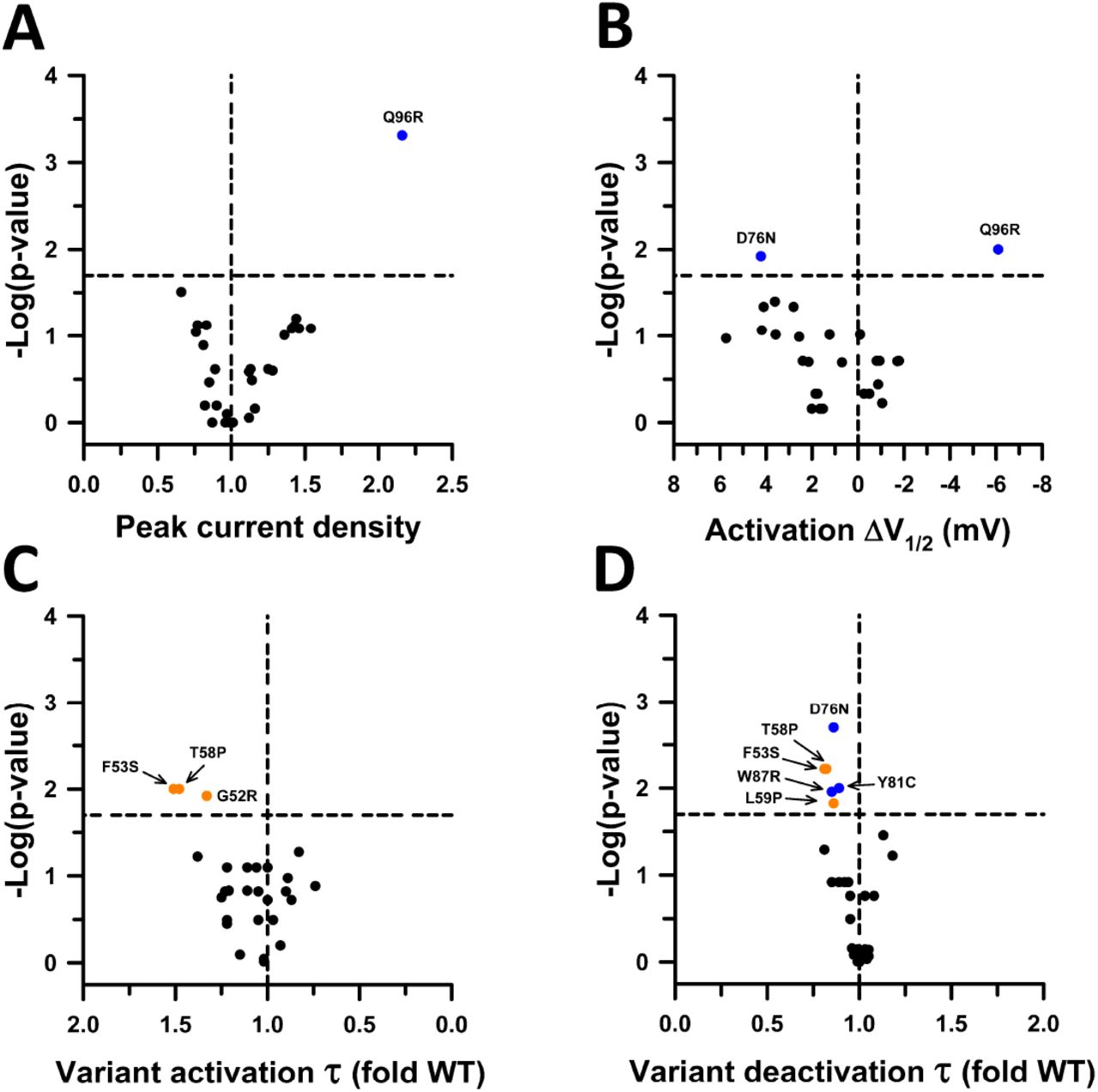
    Functional properties of KCNE1 variants in the heterozygous state. ( A ) Volcano plots of mean JNJ-303 sensitive peak whole-cell current density measured at +60 mV from CHO-E1 cells co-expressing WT KCNQ1 with each KCNE1 variant. Data are displayed as fold divergence from WT channels recorded in parallel. Only variants with peak current density significantly different from WT ( P < 0.02, horizontal dashed line) are labeled. Values to the right or left of the vertical dashed line (normalized WT value) represent current density larger or smaller than WT, respectively. ( B ) Volcano plots of mean difference (ΔV½ in mV) between the averaged V½ for variant and WT channels recorded in parallel. Only variants with peak current density significantly different from WT (P<0.02, horizontal dashed line) are labeled. Values to the right or left of the vertical dashed line indicate hyperpolarized or depolarized activation V½, respectively. ( C ) Volcano plots of mean activation time constants (τ) determined for each heterozygous KCNE1 variant plotted as the ratio to the averaged activation time constant for WT channels recorded in parallel. Values to the right or left of the vertical dashed line (no difference from WT) indicate faster or slower activation, respectively. ( D ) Volcano plots of mean deactivation time constants (τ) determined for each heterozygous KCNE1 variant plotted as the ratio to the averaged deactivation time constant for WT channels recorded in parallel. Values to the right or left of the vertical dashed line indicate slower or faster deactivation, respectively. Symbols colors are defined in previous figures. The number of recorded cells for each variant and individual P -values are presented in Supplemental Dataset 2 . Scatter plots of individual data are presented in Supplemental Figure S8 .

    Journal: bioRxiv

    Article Title: Functional profiling of KCNE1 variants informs population carrier frequency of Jervell and Lange-Nielsen syndrome type 2

    doi: 10.1101/2025.03.28.646046

    Figure Lengend Snippet: Functional properties of KCNE1 variants in the heterozygous state. ( A ) Volcano plots of mean JNJ-303 sensitive peak whole-cell current density measured at +60 mV from CHO-E1 cells co-expressing WT KCNQ1 with each KCNE1 variant. Data are displayed as fold divergence from WT channels recorded in parallel. Only variants with peak current density significantly different from WT ( P < 0.02, horizontal dashed line) are labeled. Values to the right or left of the vertical dashed line (normalized WT value) represent current density larger or smaller than WT, respectively. ( B ) Volcano plots of mean difference (ΔV½ in mV) between the averaged V½ for variant and WT channels recorded in parallel. Only variants with peak current density significantly different from WT (P<0.02, horizontal dashed line) are labeled. Values to the right or left of the vertical dashed line indicate hyperpolarized or depolarized activation V½, respectively. ( C ) Volcano plots of mean activation time constants (τ) determined for each heterozygous KCNE1 variant plotted as the ratio to the averaged activation time constant for WT channels recorded in parallel. Values to the right or left of the vertical dashed line (no difference from WT) indicate faster or slower activation, respectively. ( D ) Volcano plots of mean deactivation time constants (τ) determined for each heterozygous KCNE1 variant plotted as the ratio to the averaged deactivation time constant for WT channels recorded in parallel. Values to the right or left of the vertical dashed line indicate slower or faster deactivation, respectively. Symbols colors are defined in previous figures. The number of recorded cells for each variant and individual P -values are presented in Supplemental Dataset 2 . Scatter plots of individual data are presented in Supplemental Figure S8 .

    Article Snippet: Full length cDNA encoding WT KCNQ1 (GenBank accession number AF000571 ) was engineered in the mammalian expression vector pIRES-CyOFP1 (pIRES-CyOFP1-KCNQ1, AddGene #173162).

    Techniques: Functional Assay, Expressing, Variant Assay, Labeling, Activation Assay

    Functional properties of KCNE1 variants in the heterozygous state. ( A ) Average JNJ-303-sensitive peak whole-cell current density measured at +60 mV from CHO-E1 cells co-expressing WT KCNQ1 with each KCNE1 variant. Data are displayed as fold divergence from WT channels recorded in parallel. Values to the right or left of the vertical dashed line (normalized WT value) represent current density larger or smaller than WT, respectively. ( B ) Activation voltage-dependence for each heterozygous KCNE1 variant plotted as the difference (ΔV½ in mV) between the averaged V½ for WT channels recorded in parallel. Values to the right or left of the vertical dashed line indicate hyperpolarized or depolarized activation V½, respectively. ( C ) Activation time constants (τ) determined for each heterozygous KCNE1 variant plotted as the ratio to the averaged activation time constant for WT channels recorded in parallel. Values to the right or left of the vertical dashed line (no difference from WT) indicate faster or slower activation, respectively. ( D ) Deactivation time constants (τ) determined for each heterozygous KCNE1 variant plotted as the ratio to the averaged deactivation time constant for WT channels recorded in parallel. Values to the right or left of the vertical dashed line indicate slower or faster deactivation, respectively. Location of variants is indicated by the colored symbols (green = N-terminus; orange = TM domain; blue = C-terminus). The number of recorded cells for each variant and individual P -values are presented in Dataset 2 .

    Journal: bioRxiv

    Article Title: Functional profiling of KCNE1 variants informs population carrier frequency of Jervell and Lange-Nielsen syndrome type 2

    doi: 10.1101/2025.03.28.646046

    Figure Lengend Snippet: Functional properties of KCNE1 variants in the heterozygous state. ( A ) Average JNJ-303-sensitive peak whole-cell current density measured at +60 mV from CHO-E1 cells co-expressing WT KCNQ1 with each KCNE1 variant. Data are displayed as fold divergence from WT channels recorded in parallel. Values to the right or left of the vertical dashed line (normalized WT value) represent current density larger or smaller than WT, respectively. ( B ) Activation voltage-dependence for each heterozygous KCNE1 variant plotted as the difference (ΔV½ in mV) between the averaged V½ for WT channels recorded in parallel. Values to the right or left of the vertical dashed line indicate hyperpolarized or depolarized activation V½, respectively. ( C ) Activation time constants (τ) determined for each heterozygous KCNE1 variant plotted as the ratio to the averaged activation time constant for WT channels recorded in parallel. Values to the right or left of the vertical dashed line (no difference from WT) indicate faster or slower activation, respectively. ( D ) Deactivation time constants (τ) determined for each heterozygous KCNE1 variant plotted as the ratio to the averaged deactivation time constant for WT channels recorded in parallel. Values to the right or left of the vertical dashed line indicate slower or faster deactivation, respectively. Location of variants is indicated by the colored symbols (green = N-terminus; orange = TM domain; blue = C-terminus). The number of recorded cells for each variant and individual P -values are presented in Dataset 2 .

    Article Snippet: Full length cDNA encoding WT KCNQ1 (GenBank accession number AF000571 ) was engineered in the mammalian expression vector pIRES-CyOFP1 (pIRES-CyOFP1-KCNQ1, AddGene #173162).

    Techniques: Functional Assay, Expressing, Variant Assay, Activation Assay

    Correlation of peak current density with functional and trafficking scores from a KCNE1 deep mutation scan. ( A ) Plot of peak current density measured in cells co-expressing WT KCNQ1 with KCNE1 variants (homozygous state) compared with the Functional Score reported for each variant determined by a cell fitness assay. ( B ) Plot of peak current density measured in cells co-expressing WT KCNQ1 with KCNE1 variants (homozygous state) compared with the reported Trafficking Score for each variant. In both plots, solid blue lines represent a linear regression fit to the data with 95% CI shown as light blue shadow.

    Journal: bioRxiv

    Article Title: Functional profiling of KCNE1 variants informs population carrier frequency of Jervell and Lange-Nielsen syndrome type 2

    doi: 10.1101/2025.03.28.646046

    Figure Lengend Snippet: Correlation of peak current density with functional and trafficking scores from a KCNE1 deep mutation scan. ( A ) Plot of peak current density measured in cells co-expressing WT KCNQ1 with KCNE1 variants (homozygous state) compared with the Functional Score reported for each variant determined by a cell fitness assay. ( B ) Plot of peak current density measured in cells co-expressing WT KCNQ1 with KCNE1 variants (homozygous state) compared with the reported Trafficking Score for each variant. In both plots, solid blue lines represent a linear regression fit to the data with 95% CI shown as light blue shadow.

    Article Snippet: Full length cDNA encoding WT KCNQ1 (GenBank accession number AF000571 ) was engineered in the mammalian expression vector pIRES-CyOFP1 (pIRES-CyOFP1-KCNQ1, AddGene #173162).

    Techniques: Functional Assay, Mutagenesis, Expressing, Variant Assay

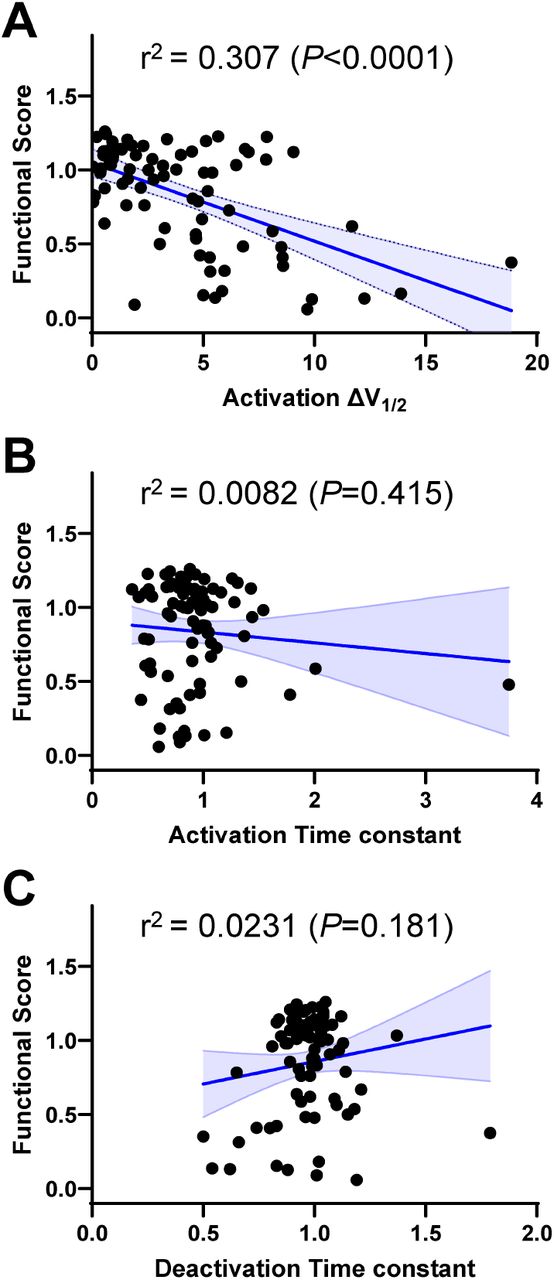
    Correlation of biophysical properties with functional scores from a KCNE1 deep mutation scan. ( A ) Plot of differences in activation V½ (ΔV½ in mV) measured in cells co-expressing WT KCNQ1 with KCNE1 variants (homozygous state) compared with the Functional Score reported for each variant determined by a cell fitness assay. ( B ) Plot of differences in activation time constants measured in cells co-expressing WT KCNQ1 with KCNE1 variants (homozygous state) compared with the reported Functional Score. ( C ) Plot of differences in deactivation time constants measured in cells co-expressing WT KCNQ1 with KCNE1 variants (homozygous state) compared with the reported Functional Score.

    Journal: bioRxiv

    Article Title: Functional profiling of KCNE1 variants informs population carrier frequency of Jervell and Lange-Nielsen syndrome type 2

    doi: 10.1101/2025.03.28.646046

    Figure Lengend Snippet: Correlation of biophysical properties with functional scores from a KCNE1 deep mutation scan. ( A ) Plot of differences in activation V½ (ΔV½ in mV) measured in cells co-expressing WT KCNQ1 with KCNE1 variants (homozygous state) compared with the Functional Score reported for each variant determined by a cell fitness assay. ( B ) Plot of differences in activation time constants measured in cells co-expressing WT KCNQ1 with KCNE1 variants (homozygous state) compared with the reported Functional Score. ( C ) Plot of differences in deactivation time constants measured in cells co-expressing WT KCNQ1 with KCNE1 variants (homozygous state) compared with the reported Functional Score.

    Article Snippet: Full length cDNA encoding WT KCNQ1 (GenBank accession number AF000571 ) was engineered in the mammalian expression vector pIRES-CyOFP1 (pIRES-CyOFP1-KCNQ1, AddGene #173162).

    Techniques: Functional Assay, Mutagenesis, Activation Assay, Expressing, Variant Assay